Tuesday, March 2, 2021

Design Thinking: Empathy

In our Empathy Design Thinking session, we were buddied up with another MIT teacher. We had to perform a role play where one person took on the role as the teacher and the other as the student. 

We used our question/problem as the context for the role play. The idea of the role play was to demonstrate the challenges that our learners face when confronted with the problem we have identified. In my case my learner was struggling to solve a maths strategy due to their limited maths knowledge (times tables). 

This session helped to clarify my problem in the eyes of others as it identified the real challenges our learners face in the classroom. It showed my other MIT colleagues how this problem is an issue and the barrier it is to students academic progress. I think it highlighted to others why and how this is such a problem in the classroom. It was great to role play it out - it made the problem 'come to life'. 


Below is a poster I have created, this shows the problem from the perspective of the learner. It identifies the following in the context of my challenge;

  • What do my learners do when faced with the challenge?
  • What do my learners think?
  • What do my learners say?
  • How do my learners feel?

Monday, March 1, 2021

MIT Hui

Last Thursday through to Saturday we headed to Kuaotunu in the Coromandel for our first MIT 2021 (Manaiakalani Innovative Teachers) Hui. 


This Hui was the first time all for us MIT2021 teachers to meet each other. There are seven teachers from a range schools across New Zealand. It was great to talk to all the other teachers and discuss their proposal ideas. 

The purpose of this Hui was around team building with our other MIT2021 colleagues and to start our design thinking process around our proposals.

Design thinking...

"is a human-centered approach to innovation that draws from the designer's toolkit to integrate the needs of people, the possibilities of technology, and the requirements for ... success.” 

Tim Brown, CEO of IDEO. 


Within our design thinking  there was a range of tasks we engaged in labeled; 'Discovery', 'Empathy', 'Interpretation' and 'Who'. I will elaborate and discuss these in more depth in subsequent blog posts. 

It was great to meet with the other teachers and find out more about their initial proposal ideas, I'm looking forward to working with everyone throughout the year and to see where each person's project takes them. 


Sunday, February 28, 2021

MIT Moonshot Proposal - 5 Why's

Our first step in our MIT Design Thinking journey was to create our 'Moonshot Proposal'. For this task we had to; identify a challenge impacting achievement among our students, provide evidence relating to this challenge, ideate two possible proposals and consider how technology can be used to help address this challenge. 

I identified the following challenge within my current students; 

"A significant number of our 2021 Year 7/8 cohort are below curriculum level expectation in Mathematics, due to gaps in their maths knowledge". 

Once our Moonshot Proposal was complete, we were teamed up with another teacher from the programme. The purpose of teaming up with another teacher was to dive deeper into our initial proposals and ask 5 'why' questions. This helped me to dissect and unpack my problem at a deeper level, but it also helped to reveal the underlying causes of the problem.  

I have attached my '5 Why's' Poster below, this displays our conversation around my proposal. 
This was a relatively simple tool to use, it helped to identify the most obvious aspects of the problem and allows us to dig deeper into the problem. 


Saturday, February 13, 2021

2021 Manaiakalani Innovative Teachers (MIT)

This year I have been fortunate enough to become part of the 2021 Manaiakalani Innovative Teachers Programme.  Throughout the year, I will be working alongside 6 others teachers from around New Zealand to "investigate ways to accelerate learning outcomes for our young people via the Manaiakalani pedagogy" (Learn, Create, Share). 

The Manaiakalani Education Trust will support our projects this year and will help us to challenge our teaching practice through inquiring in innovative ways. This project will be very collaborative and we will be drawing on each other throughout the year to help guide us through our projects.

The challenge I plan to investigate this year with my students is around maths knowledge - I would like to design a tool that will help them to develop their maths knowledge to further improve their overall mathematics ability 

Throughout the year, we will be using design thinking principles to guide us - these will be further explained in subsequent blog posts.

I am looking forward to being part of this programme and meeting the teachers I will be working alongside. I will keep my blog updated with my projects progress throughout the year. 


Tuesday, September 17, 2019

Digital Fluency Intensive - Final Session

Today was our final DFI session. We started the session looking in the final aspect of the Manaiakalani pedagogy - ubiquitous learning. Ubiquitous learning refers to learning that can happen anytime, anyplace at any pace. 

Breaking down ubiquitous learning - it is learning that is rewindable that be done at any point in the school day. 
This is important as it is making learning more accessible to our students. They are able to refer back to material, but also catch up on material they have missed. 

Reflecting on my own teaching in Kaupeka - lots of our learning is ubiquitous. Students have access to our google site - all of our planning and resources are located on here and accessible to all students. We present students with flipped learning opportunities across subjects - this is especially valuable for maths. 

It is reaffirming to look back on my own practice and see the ubiquitous learning taking place - I like that students have so much access to their learning and this is something I will definitely continue. 

Something I aim to look into in the future is the Woolf Fisher Summer Learning Journey - looking into how blogging over the summer break (or even 2 week break) can help to accelerate students writing. 

The final component of todays session was undertaking the Google Certified Educator Level 1 exam. It was great to put all the learning from the past 9 weeks into practice and complete this exam. My next steps for learning will be looking into the Level 2 exam. 

Reflecting on the past 9 weeks I have really enjoyed learning about the Manaiakalai pedagogy and picking up heaps of new digital tools and tips to use both in and out of the classroom. This course inspired me to continue with my learning, I am now more motivated to further my understanding with using digital tools and google in the classroom. It has highlighted to me how important this is for the future of education and how valuable for the future this is. I am looking forward to putting my new learning into practice. 

Tuesday, September 10, 2019

Digital Fluency Intensive - Dealing with Data

Today is the second to last session of the DFI, I have spent some time reflecting on the course. I have found that one of the most valuable aspects of this course has been developing an improved understanding of the Manaiakalani backstory - why Manaiakalani has been formed this way and how it has been structured to meet the needs of our learners in our communities i.e. the foundations of learn, create, share. 

Dorothy Burt came down from Auckland today to give us some more insight into the Manaiaklani backstory - specifically looking into how we can ensure our learners are empowered (have agency over their learning). Creating empowered learners is the final piece of the puzzle.

In order to create these empowered learners we need to ensure that our learners are using digital devices as "not just a tool" but as something that is transformational for their learning . When technology "transforms the way we learn, it offers new unchartered experiences and opportunities". 

In order for our students to be empowered we need to ensure they are also connected (collaborative and social), ubiquitous (workers that are global and can work anytime they choose) and visible (they have agency in how they share their learning and their digital footprint). Without these other components they can not truely feel empowered in their learning. 

For the remainder of our session today we had a focus on dealing with data - specifically looking into using sheets in the most effective way. I learnt some great tips with using sheets such as formatting columns, filtering, conditional formatting, protecting cells and cropping sheets. These new tips will help me in the future with my management of using sheets to ensure I get the most out of them.

In addition to sheet, we also had a look at mymaps. We looked into using mymaps with sheets and using these two google tools together - this is something that I want to look into in the future to see how I can incorporate this into my teaching. 

Tuesday, September 3, 2019

Digital Fluency Intensive - Media

Today's session was all about media - looking into how we as teachers can use Youtube, Google Slides and Google Drawings in the classroom, for both planning and creative purposes. 

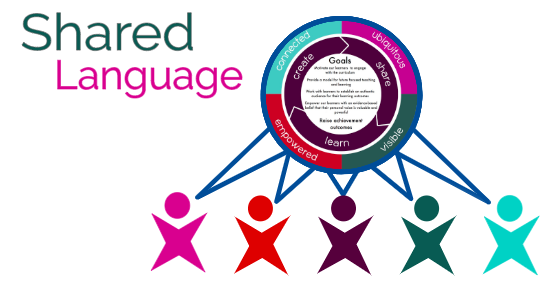
Manaiakalani stipulates that 'Connectivity is a way of life for our students'. Being part of Manaiakalani connects us to a powerful network and within this network we need to ensure we have shared language as teachers and that we understand this language. The visual below displays the shared language we must understand - learn, create, share - connected, empowered, visible, ubiquitous learners. This language was chosen purposefully to represent what we want from our learners.

Elements that I found interesting from today's session was the live streaming aspect. Last term as part of our Hub's PBL our students answered the following question 'How can we stand up against discrimination' through presenting either a talk @stfrancis, poetry slam, drama or podcast - to showcase their learning they went live on youtube.

Although I already had an understanding of what it means to go live and how to go live, it was great to get another perspective on how we can go live at school - for example, going live at sports events or performances. This would give our whānau more access to their children's learning. I aim to look into creating events on youtube to see how this can be done in the future.

Our students live performances can be found at the following youtube playlist link I created in today's session - https://www.youtube.com/playlist?list=PLB8OXsuTGB8K8GwQobMhDg_PfpduL4ziM

A further component of today's session I found interesting was using Google Forms as a creative device with writing. I created the following slideshow on how to use google forms to create a 'Pick a Part Story' - I have put this on our class site and is something I aim to share with my students in the future.


I have really enjoyed todays session - particularly looking into the creative aspect of Google Drawings and Slides, I am looking forward to implementing these new tips in the classroom. 

I am also looking forward to using Youtube more in the classroom and creating specific playlists for different areas of my teaching - today I have created a couple of playlists and have added them to my class site to share with my students.